
5 min read
Wire-wrapped crystal pendants look like fine jewelry, but they need no soldering and no expensive tools. A few lengths of wire, a crystal, and two pliers are enough to start. The bail is the loop at the top that holds the pendant on a chain, and a simple bail technique keeps the whole piece secure. This guide covers wire choice, wrapping, bail making, and finishing. The project suits a beginner who has never wrapped wire before. You will learn to hold the crystal firmly without scratching it, and to make a bail that will not pull loose. One pendant takes about an hour, and the result looks far more costly than its materials.
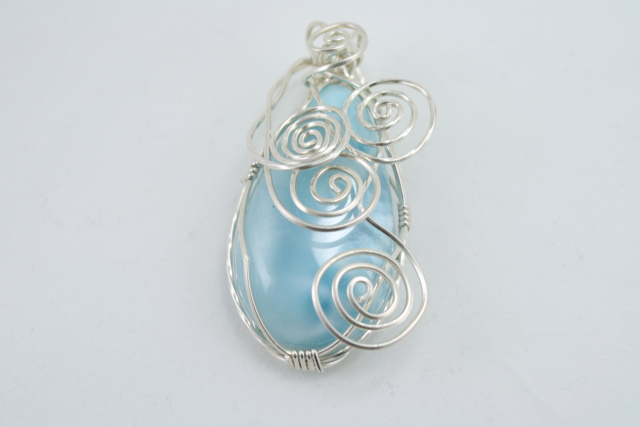
Choosing Wire and Crystals
Use copper or brass wire for practice, since both are soft, cheap, and easy to shape. For finished pendants, use sterling silver filled wire or 14k gold filled wire, since these resist tarnish. Avoid bare copper for pieces you plan to sell, since it darkens quickly on skin. For the frame, use 20 gauge wire, which is thick enough to hold a crystal firmly. For the wrapping, use 26 or 28 gauge wire, which bends easily around the frame. Buy wire labeled dead soft, since half-hard wire fights you. For crystals, choose pointed quartz, amethyst, or fluorite with one flat side. A flat side makes wrapping easier. Avoid crystals with sharp edges that can cut wire, and avoid very large crystals for a first pendant, since they are heavy and hard to hold. A crystal of 3 to 4 cm is a good size. Inspect each crystal for cracks before you wrap it. A cracked crystal can break under pressure. You also need two pairs of pliers: flat nose pliers for holding and bending, and round nose pliers for making loops. Keep the pliers clean, since dirty jaws scratch wire.
Wrapping the Crystal Frame
Cut a piece of 20 gauge wire about 30 cm long. Bend it into a U shape around the crystal, leaving equal tails on each side. The U should cradle the crystal with the open ends at the top. Hold the crystal and wire together with one hand, and use flat nose pliers to press the wire against the crystal sides. Wrap the thinner 26 gauge wire around the frame wire in a tight coil where the frame meets the crystal. This coil, called a wrap, locks the frame in place. Make six to eight coils, then cross the thin wire to the other side and coil again. Keep the coils tight and side by side, with no gaps. If a coil slips, unwrap it and redo it. The frame should grip the crystal firmly enough that it does not slide when you shake it gently. For crystals with an irregular shape, add a second wrap near the base. Do not overtighten the wraps, since too much pressure can crack a crystal. The goal is a firm cage, not a vise. Practice on a cheap quartz point before you wrap a crystal you love.
Making a Simple Bail
The bail is the loop that connects the pendant to a chain. A simple bail uses the two tails of the frame wire. Cross the tails above the crystal and twist them together for about 1 cm. Then bend the twisted section into a loop with round nose pliers. The loop should be large enough for a chain to pass through, about 6 mm across. Wrap the remaining tail ends around the base of the loop twice to lock it, then trim the ends close and tuck them in with flat nose pliers. Check that the loop is centered above the crystal, since an off-center bail makes the pendant hang crooked. Test the bail by threading a chain through it and holding the pendant up. It should hang straight with the crystal facing forward. If it tilts, adjust the bail with pliers until it balances. A well-made bail is the difference between a pendant that feels handmade and one that feels homemade.
Finishing, Polishing, and Wearing
When the wrap and bail are done, inspect the pendant closely. File any sharp wire ends with a fine needle file, then smooth them with fine sandpaper. Polish the wire with a soft cloth to remove fingerprints and tool marks. For copper or brass, a quick dip in a jewelry cleaning solution restores shine. Rinse and dry fully after cleaning. Do not use a tumbler for wire-wrapped pendants with soft crystals, since tumbling can scratch the stone. Thread the pendant onto a chain or cord and wear it for a day to test the bail and wraps. If a wrap loosens, tighten it with pliers. If the crystal shifts, add one more wrap at the base. Store wire-wrapped pendants in a soft pouch, away from other jewelry that can scratch the crystal. With practice, you will wrap a pendant in under an hour. The skills transfer to earrings and rings, so one pendant is the start of a whole jewelry line.
Wire-wrapped crystal pendants turn a simple stone into jewelry you will wear. Choose soft wire, wrap a firm frame, make a centered bail, and finish with care. The pendant you make today will still look good years from now.